Skin Barrier Repair: Why Most Skincare Routines Fail (and How to Fix It)
When products suddenly stop working, irritation increases, and skin feels unpredictable, the problem is often the skin barrier — not the products themselves.
Barrier repair isn’t a trend. It’s a prerequisite for skin that can tolerate and benefit from any routine.
In This Article
Products Included in This Article (Barrier-Repair Focus)
Barrier-Safe Cleansers
- Avène Extremely Gentle Cleanser Lotion – non-foaming, minimal surfactants, suitable during active irritation
- Vanicream Gentle Facial Cleanser – fragrance-free, lipid-preserving cleanser commonly used during barrier repair
Barrier Repair Moisturizers
- La Roche-Posay Cicaplast Baume B5 – panthenol-rich balm used for compromised barriers
- Avène Cicalfate+ Restorative Protective Cream – mineral-based formula designed to calm and protect damaged skin
Hydration Support (Low-Irritation)
- Bioderma Hydrabio Serum – humectant-focused hydration without exfoliating agents
Sunscreen Suitable During Barrier Repair (AM)
- EltaMD UV Physical SPF 41 – zinc-only mineral sunscreen suitable for reactive skin
(These examples illustrate how to choose products by function — not brand loyalty)
Disclosure: This content is created for informational and editorial purposes only. Some articles may reference products or tools for educational context. Any affiliate links or partnerships are clearly disclosed where applicable.
What Is the Skin Barrier (and Why It Matters)
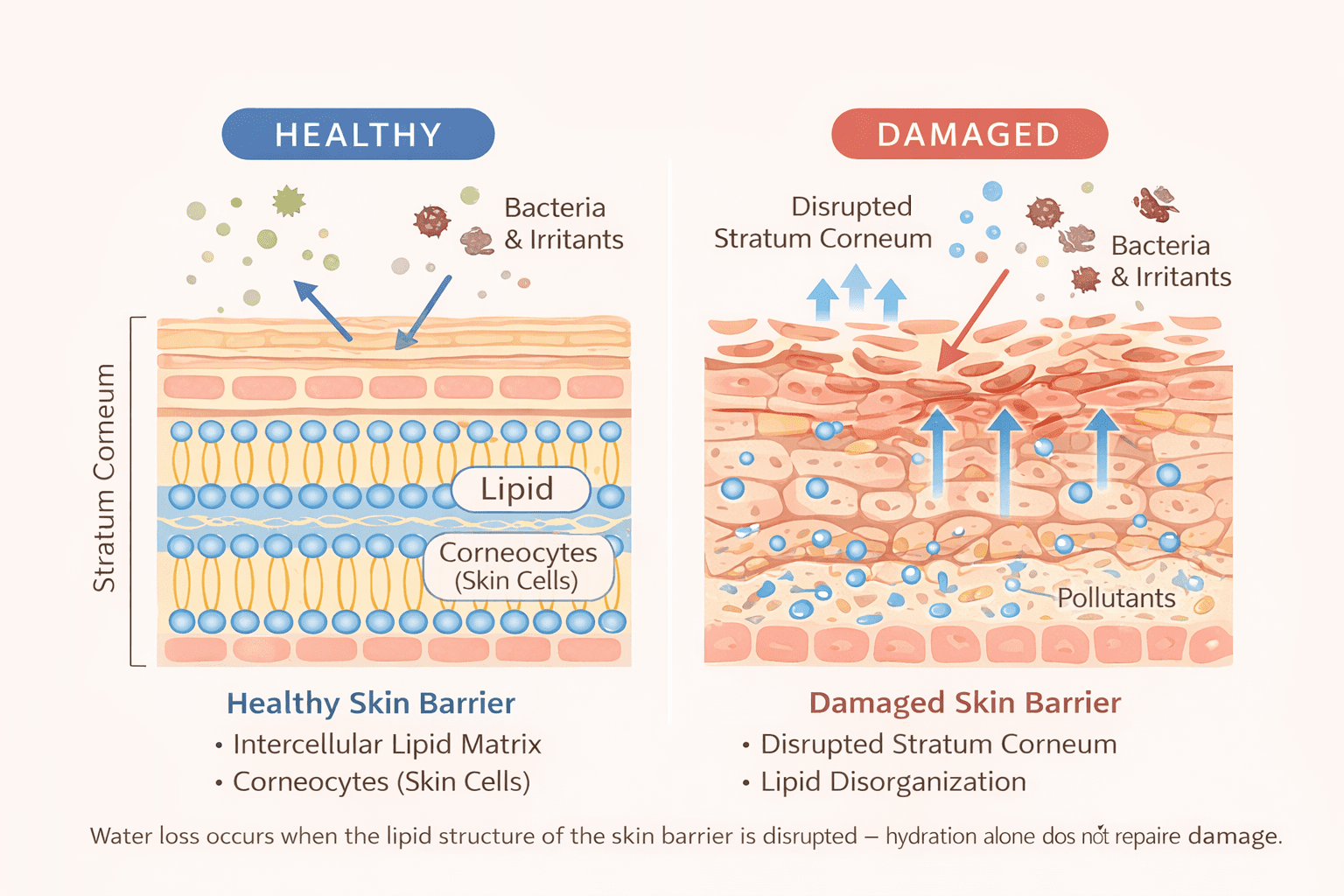
The skin barrier, also known as the stratum corneum, is the outermost layer of the skin. It is often described as a brick-and-mortar structure:
- Skin cells act as bricks
- Lipids (ceramides, cholesterol, fatty acids) act as mortar
This structure controls water retention, protects against bacteria and pollutants, and determines how well skincare products are tolerated.
When the barrier is intact, skin feels comfortable and resilient. When it’s damaged, skin becomes reactive and unpredictable.
Signs Your Skin Barrier Is Damaged
Barrier damage doesn’t always look dramatic. Common signs include:
- Tightness even after moisturizing
- Stinging or burning when applying products
- Increased redness or flushing
- Sudden breakouts despite a consistent routine
- Makeup clinging to dry patches
If several of these signs appear together, barrier repair should take priority over adding new treatments.
Why Most Skincare Routines Break the Barrier
Barrier damage is rarely caused by one product. It usually results from accumulation.
Common causes include:
- Over-exfoliation (chemical or physical)
- Using multiple actives at the same time
- Cleansers that strip natural lipids
- Skipping moisturizer on oily or acne-prone skin
- Inconsistent sunscreen use
Even well-formulated products can disrupt the barrier when layered without adequate recovery time.
How to Repair the Skin Barrier (The Simple Approach)
Barrier repair does not require complex routines. It requires removing stressors and restoring balance — ideally within a simple routine framework, as explained in A Simple Skincare Routine That Actually Works.
Step 1: Pause All Actives
Temporarily stop exfoliating acids, retinoids, and vitamin C. This allows inflammation to settle and prevents further lipid loss.
Step 2: Cleanse Gently — Once or Twice Daily
Choose low-foaming or non-foaming cleansers that support lipid retention. Skin should feel comfortable after cleansing — never tight.
During barrier repair, cleansers are chosen for how little they interfere with the skin’s lipid structure.
Formulations such as Avène Extremely Gentle Cleanser Lotion and Vanicream Gentle Facial Cleanser are often referenced during this phase because they cleanse without foaming aggressively or stripping natural lipids.
Step 3: Rebuild With Barrier-Supporting Moisturizers
Barrier repair depends on replacing what the skin has lost. Look for moisturizers containing ceramides, cholesterol, fatty acids, and glycerin.
Apply generously, especially at night.
Barrier repair moisturizers are selected for their ability to soothe inflammation while supporting recovery.
Products like La Roche-Posay Cicaplast Baume B5 and Avène Cicalfate+ Restorative Protective Cream are commonly used during active barrier damage due to their calming, protective formulations.
Step 4: Support Hydration (Without Irritation)
Hydration allows skin cells to function and repair more effectively. Use humectant-based products without exfoliating ingredients.
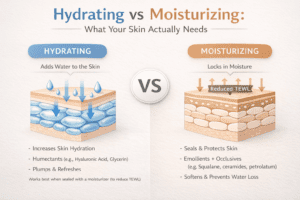
Apply hydrating products to damp skin and seal immediately with a moisturizer. For clarity on hydration versus moisture, see Hydrating vs. Moisturizing: What Your Skin Actually Needs.
Low-irritation hydration is especially important when the barrier is compromised.
Humectant-based formulas such as Bioderma Hydrabio Serum are often referenced because they increase water content without introducing exfoliating or sensitizing ingredients.
Step 5: Protect the Barrier Daily With Sunscreen
UV exposure weakens barrier lipids and slows recovery. Use a broad-spectrum sunscreen every morning, even during barrier repair.
Skipping sunscreen prolongs healing time.
During barrier repair, mineral sunscreens are often preferred for their lower irritation potential.
EltaMD UV Physical SPF 41 is commonly referenced in this context because it relies on zinc oxide for broad-spectrum protection and is generally well tolerated by reactive skin.
Ingredients That Support Barrier Recovery
Barrier-friendly ingredients include:
- Ceramides
- Panthenol
- Glycerin
- Cholesterol
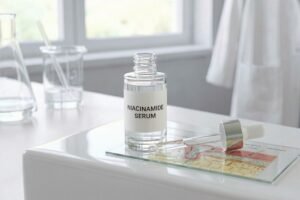
- Niacinamide (low concentrations)
Niacinamide can support ceramide production, but during active irritation, even barrier-supporting actives should be delayed. A deeper explanation is covered in What Is Niacinamide and How It Actually Works in Skincare.
How Long Does Barrier Repair Take?
Barrier recovery is gradual:
- Mild damage: 1–2 weeks
- Moderate damage: 3–6 weeks
- Chronic disruption: longer, depending on consistency
Frequent product changes reset progress. Stability accelerates repair.
Common Mistakes During Barrier Repair
Barrier repair often fails when:
- Actives are reintroduced too quickly
- Moisturizer is applied sparingly
- Cleansing is excessive
- Sunscreen is skipped indoors
Healing requires patience, not intensity.
Final Thoughts
Barrier repair is not about adding more products. It’s about giving the skin the conditions it needs to recover.
When the barrier is strong, skin becomes calmer, more predictable, and more responsive to treatment.
Repair first. Everything else works better after.