Hydrating vs. Moisturizing: What Your Skin Actually Needs
And why using the wrong one keeps your skin feeling tight
Many skincare routines fail not because the products are bad — but because hydration and moisturization are treated as the same thing. When skin still feels tight despite “doing everything right,” this misunderstanding is often the reason.
Hydration and moisturization solve two different skin problems. Knowing which one your skin is missing — and when — can change how your entire routine performs, without adding extra steps or chasing new products.
This article breaks down the difference clearly, so you can make decisions based on skin function rather than trial and error.
In This Article
This guide explains:
- The real difference between hydration and moisturization
- Why skin can feel tight even after using a cream
- How to tell what your skin is actually missing
- How hydration and barrier support work together
- Simple product examples to illustrate each role
Products Included in This Article
The products mentioned below are representative examples, used to illustrate how different formulations function within a routine.
Hydrating (Water-Based) Examples
- La Roche-Posay Hyalu B5 Serum
- Hada Labo Gokujyun Premium Lotion
Moisturizing (Sealing) Examples
- La Roche-Posay Toleriane Sensitive Fluide
- First Aid Beauty Ultra Repair Cream
Hydration and Moisturization Are Not the Same Thing
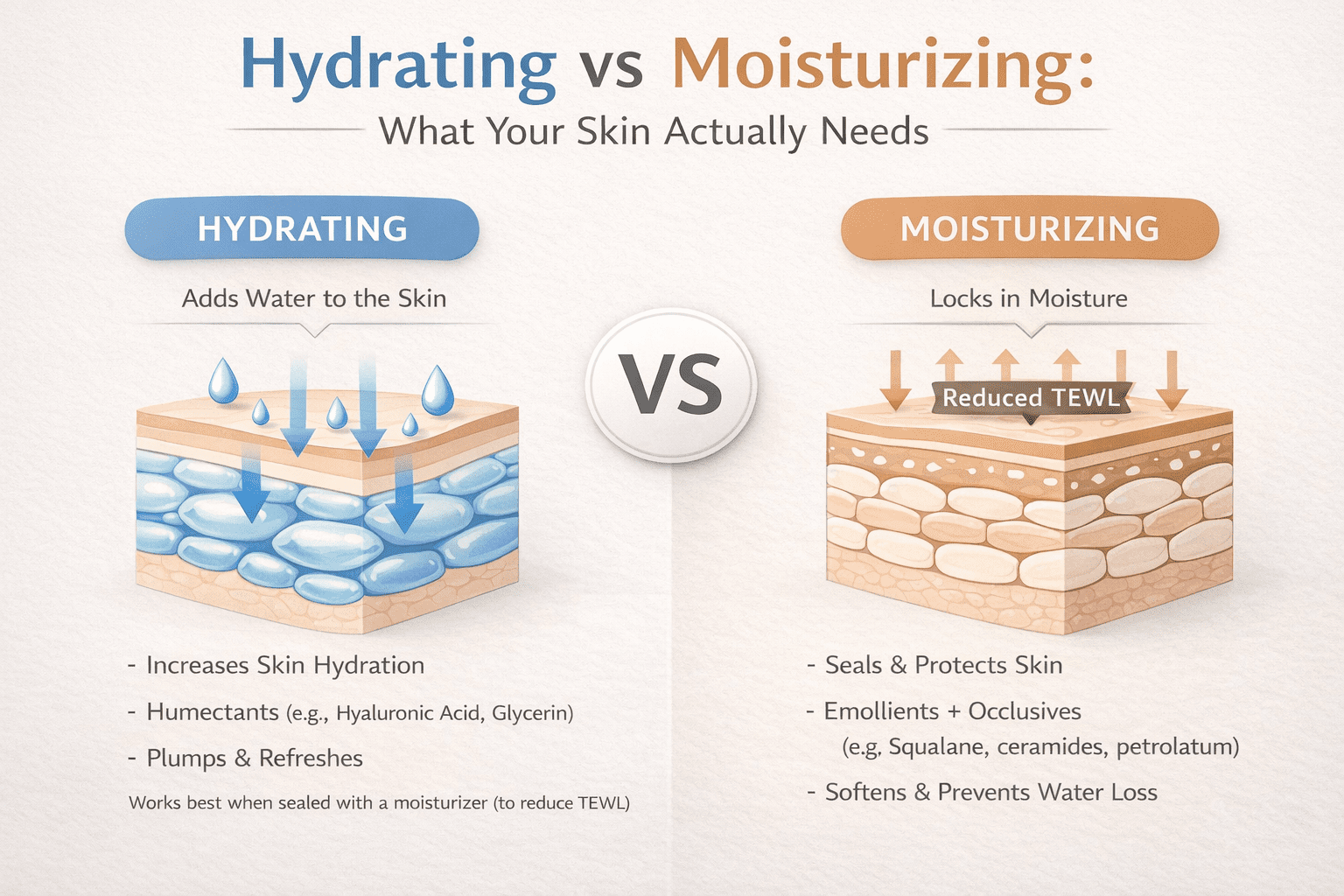
Hydration refers to water content in the skin.
Moisturization refers to slowing the loss of that water.
You can moisturize without hydrating — and hydrate without moisturizing — but neither works well on its own. This confusion is one of the most common reasons otherwise simple routines fail, even when good products are used.
The importance of balancing these steps is introduced in A Simple Skincare Routine That Actually Works, where routine structure is explained in more detail.
What Hydrating Products Actually Do
Hydrating products rely on humectants — ingredients that attract and bind water to the skin.
Common humectants include:
- Hyaluronic acid
- Glycerin
- Panthenol
Formulas built around these ingredients help dehydrated skin feel more comfortable and elastic by increasing surface water content.
Hydrating Products (Comparison)
| Product | Texture | Hydration Focus | Best For |
| La Roche-Posay Hyalu B5 Serum | Lightweight serum | Hyaluronic acid + panthenol | Tight, dehydrated skin |
| Hada Labo Gokujyun Premium Lotion | Lotion / essence | Multi-weight hyaluronic acid | Layered hydration |
Hydration improves plumpness and comfort — but it does not last unless it is sealed.
What Moisturizing Products Actually Do
Moisturizers work by reducing water loss, not by adding water. They create a protective layer that slows evaporation and supports the skin barrier.
These products typically rely on:
- Occlusives to reduce moisture loss
- Emollients to smooth skin texture
- Barrier-supporting ingredients to maintain stability
Moisturizing Products (Comparison)
| Product | Texture | Primary Role | Best For |
| La Roche-Posay Toleriane Sensitive Fluide | Lightweight lotion | Seal hydration lightly | Normal / sensitive skin |
| First Aid Beauty Ultra Repair Cream | Rich cream | Reduce water loss | Dry, stressed skin |
Moisturizers work best after hydration, not instead of it.
How to Tell What Your Skin Is Missing
Skin tightness doesn’t always mean dryness.
Signs of Dehydrated Skin
- Tightness shortly after cleansing
- Fine lines that soften when skin is damp
- Makeup settling into lines
Signs of Dry Skin
- Flaking
- Rough texture
- Persistent discomfort even after moisturizing
If your skin feels tight after applying cream, dehydration — not dryness — may be the missing step.
Why Moisturizer Alone Often Isn’t Enough
Applying moisturizer to dehydrated skin is like sealing an empty container.
Without enough water in the skin:
- Creams sit on the surface
- Comfort fades quickly
- Skin still feels tight
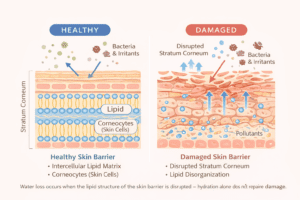
This problem becomes more noticeable when the skin barrier is compromised, allowing water to escape faster than it can be replaced — a process explained in How to Repair Your Skin Barrier Without Overcomplicating Your Routine.
Hydration, Moisture, and Active Ingredients
Active ingredients tend to work better on hydrated, well-sealed skin.
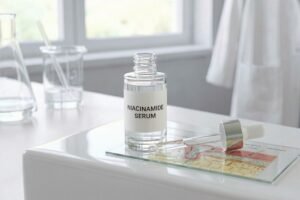
For example, niacinamide is often better tolerated when dehydration is addressed first. When hydration is missing, actives can feel irritating instead of helpful — a common issue explored further in What Is Niacinamide and How It Actually Works in Skincare.
Final Thoughts
Hydration and moisturization solve different problems, but they work best together.
When skin has enough water and that water is properly sealed, routines feel simpler, products perform better, and skin becomes easier to manage over time.
The solution isn’t more products.
It’s understanding what your skin actually needs — and responding to it consistently.