
What Is Niacinamide and How It Actually Works in Skincare
Niacinamide is one of the most widely used skincare ingredients, yet its real benefits—and limitations—are often misunderstood. This guide explains what niacinamide does, who it’s for, and when it actually makes sense to use it.
Niacinamide works best when it supports the skin quietly, rather than trying to change it.
Disclosure: This content is created for informational and editorial purposes only. Some articles may reference products or tools for educational context. Any affiliate links or partnerships are clearly disclosed where applicable.
Niacinamide appears in everything—from gentle cleansers to advanced serums—often described as a solution for acne, redness, enlarged pores, and uneven tone. Because it’s marketed as “multi-tasking,” it’s easy to assume more is better.
In reality, niacinamide works best when it’s understood properly and used with intention. Like many skincare ingredients, its effectiveness depends less on hype and more on how—and why—it’s used within a routine.
Covered in This Guide
- What niacinamide is and where it comes from
- What it actually does for the skin
- Who benefits most from using it
- Common mistakes that reduce its effectiveness
- How it fits into a simple skincare routine
What Is Niacinamide?
Niacinamide is a form of vitamin B3, a water-soluble vitamin that supports the skin’s barrier function. Unlike stronger active ingredients, it doesn’t exfoliate or resurface the skin. Instead, it works quietly in the background, helping skin function more efficiently over time.
Because it’s generally well-tolerated, niacinamide is often included in products designed for daily use. This is one reason it appears so frequently in routines aimed at reducing irritation or strengthening the skin barrier.
At this stage, niacinamide is often discussed alongside other foundational ingredients like hydrating agents and barrier-supporting components, which is why it commonly shows up in guides about building a simpler skincare routine rather than an aggressive one.
What Does Niacinamide Actually Do for Skin?
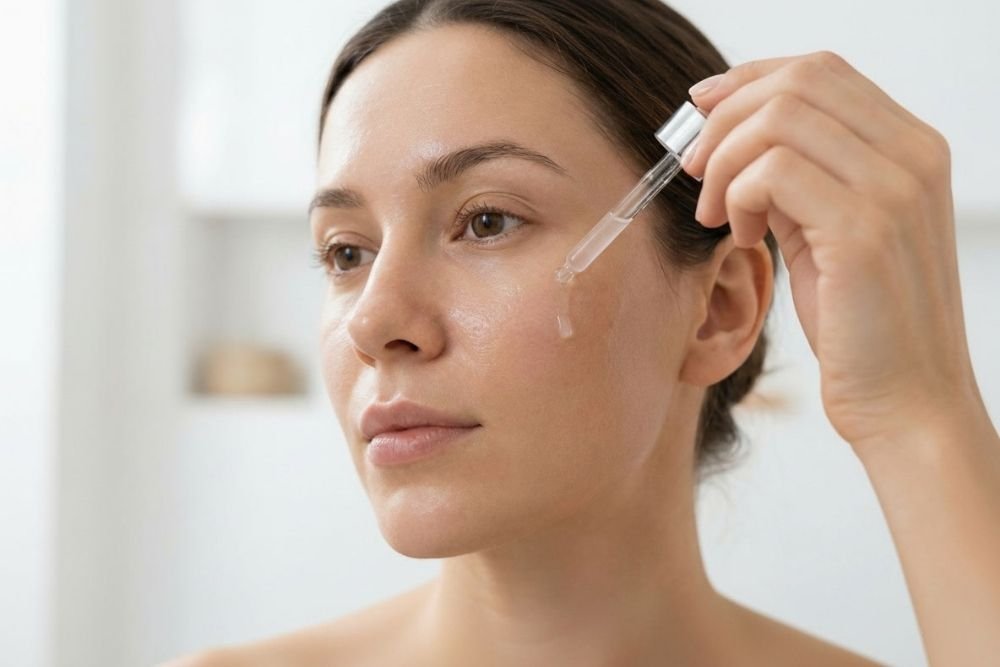
Niacinamide’s strength lies in regulation, not transformation. Its benefits are subtle but cumulative.
1. Supports the Skin Barrier
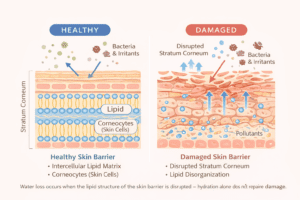
A healthy skin barrier helps retain moisture and protects against environmental stressors. Niacinamide assists the skin in producing ceramides, which are essential for maintaining that barrier.
This is especially relevant for people who experience sensitivity after overusing exfoliants or layering too many products—an issue often discussed in guides about why skincare routines stop working over time.
2. Helps Balance Oil Production
Niacinamide can help regulate sebum output, making it useful for skin that feels oily in some areas but dry in others. Rather than stripping oil, it encourages balance, which is why it’s frequently recommended for combination skin types.
3. Improves the Appearance of Pores (Indirectly)
Niacinamide does not physically shrink pores. Instead, by improving elasticity and reducing excess oil, pores can appear less noticeable over time. This distinction matters, as unrealistic expectations often lead people to overuse products unnecessarily.
Who Should Use Niacinamide (And Who Might Not)?
Niacinamide is suitable for many skin types, but it’s not mandatory for everyone.
It may be helpful if you:
- Have combination or oily skin
- Experience redness or mild irritation
- Are rebuilding your skin barrier after active overuse
It may not be necessary if you:
- Already have a minimal routine that works well
- Prefer fewer ingredients overall
- Are focusing on a single skin concern with targeted treatments
This is where understanding ingredient overload becomes important—a topic often explored in discussions about simplifying routines rather than expanding them.
Common Mistakes When Using Niacinamide
One of the most common issues isn’t the ingredient itself—it’s how it’s used.
- Using multiple niacinamide products at once
- Assuming higher percentages work faster
- Layering it unnecessarily with conflicting actives
Niacinamide works best as part of a balanced system. Overuse can lead to sensitivity, even though the ingredient is generally considered gentle.
This same pattern appears in other areas of beauty routines, including tool usage and storage, where excess often creates more problems than solutions.
How Niacinamide Fits Into a Simple Routine
In most cases, niacinamide fits best after cleansing and before heavier moisturizers. It doesn’t require complex layering, and it doesn’t need to be combined with multiple actives to be effective.
For readers interested in simplifying rather than expanding their routines, understanding ingredient roles—rather than product counts—is often the more sustainable approach.
Final Thoughts
Niacinamide isn’t a miracle ingredient, but it doesn’t need to be. Its value comes from consistency, balance, and restraint. When used thoughtfully, it supports the skin rather than overwhelming it.
Understanding what niacinamide can do—and what it doesn’t need to do—makes it easier to decide whether it belongs in your routine at all.